

If you’re self-employed, a freelancer, independent contractor, consultant, or small business owner running your own gig in 2026, you already know the drill: no employer-sponsored health plan, no HR department handling paperwork, and full responsibility for finding affordable coverage that actually protects you and your family.
Premiums have jumped about 20% nationally this year after the enhanced ACA subsidies expired at the end of 2025, but the good news is that solid, comprehensive options still exist — especially through the Health Insurance Marketplace (healthcare.gov). Many self-employed people are still paying far less than the sticker price thanks to regular premium tax credits, the 100% self-employed health insurance deduction, and smart plan choices.
In this complete 2026 guide (last updated April 2026), I’ll walk you through everything you need to know in plain, straightforward language. We’ll cover the best health insurance companies for self-employed folks, real cost examples, how subsidies actually work now, step-by-step comparison tips, tax breaks, alternatives, common mistakes, and a full FAQ section.
Whether you’re just starting out or shopping for renewal, this article is built to help you make an informed decision without the sales pitch. Let’s dive in.
Why Self-Employed People Face Unique Health Insurance Challenges in 2026
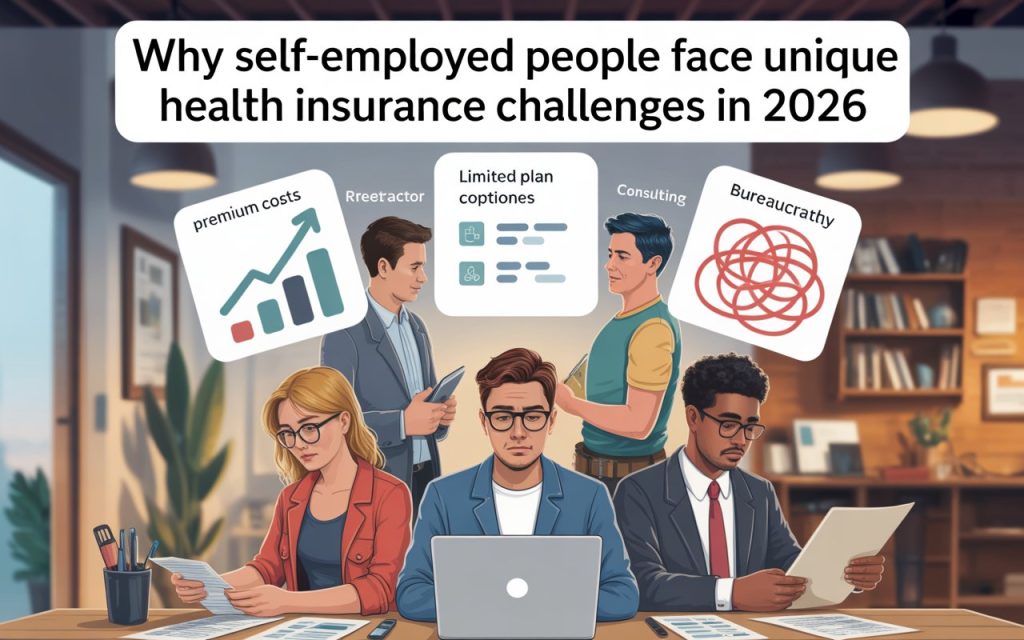
Being your own boss comes with freedom — but also risk when it comes to healthcare. Unlike W-2 employees, you don’t get group rates or employer contributions. You pay the full premium yourself (though you can deduct 100% of it on your taxes — more on that later).
Key realities in 2026:
- National ACA premiums rose roughly 20% on average.
- Enhanced subsidies (the extra help that kept premiums low from 2021–2025) have expired, so many people are seeing higher out-of-pocket costs.
- Still, over 90% of Marketplace enrollees qualify for some premium tax credit if their income is between 100%–400% of the Federal Poverty Level (FPL).
- Pre-existing conditions are still fully covered under ACA plans.
- You can enroll during Open Enrollment (Nov 1 – Jan 15 in most states) or with a qualifying life event.
The bottom line: the system isn’t perfect, but with the right plan you can keep costs manageable while getting real protection.
Understanding the ACA Health Insurance Marketplace for Self-Employed Workers
The Health Insurance Marketplace (healthcare.gov or your state’s version) is still the #1 best option for most self-employed Americans. It’s where you’ll find ACA-compliant plans that cover essential benefits: hospitalization, prescription drugs, preventive care, maternity, mental health, and more.
You are NOT considered an “employer” if you have no employees (or only yourself/spouse), so you shop as an individual.
Metal Tiers Explained (2026 Averages for a 40-Year-Old – Pre-Subsidy)
| Metal Tier | Average Monthly Premium | Average Deductible | Out-of-Pocket Max (Individual) | Best For | Actuarial Value |
| Bronze | $420 | $7,500 | $10,600 | Healthy people with savings | 60% |
| Silver | $589 | $4,500 | $10,600 (lower with CSR) | Most self-employed (with subsidies) | 70% |
| Gold | $712 | $1,500 | $10,600 | Frequent doctor visits | 80% |
| Platinum | $856 | $250 | $10,600 | Very high usage | 90% |
Source: Aggregated data from MoneyGeek, KFF, and insurer filings 2026. Actual rates vary by age, location, and tobacco use.
Pro Tip: If your income qualifies you for Cost-Sharing Reductions (usually 100%–250% FPL), Silver plans become the clear winner because your deductible and out-of-pocket maximum drop dramatically.
Top Health Insurance Companies for Self-Employed in 2026
Here’s a clear comparison of the strongest players based on nationwide availability, customer satisfaction, network size, and value for self-employed buyers (data pulled from MoneyGeek, J.D. Power, and insurer reports):
| Rank | Company | Best For | Avg Monthly Premium (40yo, Silver) | Network Type | Availability | Rating (MoneyGeek) |
| 1 | Blue Cross Blue Shield | Nationwide coverage & flexibility | $580–$720 | PPO / HMO | All 50 states | 4.7/5 |
| 2 | UnitedHealthcare | ACA + short-term bridge options | $590–$750 | PPO / EPO | Most states | 4.6/5 |
| 3 | Kaiser Permanente | Affordable HMO & great care | $540 | HMO | 8 states + DC | 4.8/5 |
| 4 | Oscar | Modern app + telemedicine | $585 | PPO | 18 states | 4.5/5 |
| 5 | Ambetter (Centene) | Budget-friendly Silver plans | $520–$650 | EPO | 20+ states | 4.3/5 |
Quick Recommendations:
- Live anywhere? → Go with Blue Cross Blue Shield first.
- Want lowest possible premium in CA, CO, GA, etc.? → Kaiser Permanente.
- Need a huge doctor network and app-based tools? → Oscar or UnitedHealthcare.
- On a tight budget? → Ambetter Silver plans often win on price.
2026 Costs & How Much You’ll Actually Pay (With Real Examples)
A 40-year-old non-smoker in a mid-cost state might see these full prices before subsidies:
- Bronze: $380–$480/month
- Silver: $520–$650/month
- Gold: $680–$780/month
But subsidies change everything.
2026 Premium Tax Credit Eligibility (Post-Enhanced Subsidy Expiration)
| Household Income (% of FPL) | Example Income (Single Person) | Max % of Income You Pay for Benchmark Silver Plan |
| 100–150% | Up to ~$23,500 | 2.0%–4.2% |
| 150–200% | ~$23,500–$31,300 | 4.2%–6.6% |
| 200–250% | ~$31,300–$39,125 | 6.6%–8.4% |
| 250–300% | ~$39,125–$46,950 | 8.4%–9.5% |
| 300–400% | ~$46,950–$62,600 | Up to 9.96% |
| Over 400% | Above $62,600 | No subsidy |
2026 FPL for single person ≈ $15,650 at 100%. Source: IRS Revenue Procedure 2025-25 & KFF.
Real-Life Example:
- 40-year-old freelancer earning $55,000/year (single, no kids) in a medium-cost area.
- Full Silver premium: $620/month.
- After subsidy: You might pay only $280–$380/month (depending on exact location).
- Plus you deduct the entire $620 on your taxes → real net cost drops even lower.
How to Choose the Best Plan – Step-by-Step
- Estimate your 2026 income accurately (use last year’s tax return + expected growth).
- Go to healthcare.gov and create an account (or your state exchange).
- Enter your ZIP code, household size, and income.
- Compare plans side-by-side — filter by:
- Your doctors & hospitals in-network
- Prescription drugs you take
- Monthly premium AFTER subsidy
- Total estimated yearly cost (premium + deductible + copays)
- Check the Summary of Benefits for real out-of-pocket numbers.
- Run the numbers for Bronze vs Silver (use the plan’s “total cost estimator” tool).
Tax Advantages Every Self-Employed Person Should Use in 2026
- Self-Employed Health Insurance Deduction: You can deduct 100% of your premiums as an adjustment to income (even if you take the standard deduction).
- Health Savings Account (HSA): Pair with a Bronze or Catastrophic plan. 2026 contribution limit (individual): $4,300. Triple tax advantage — deductible, tax-free growth, tax-free withdrawals for medical expenses.
- New in 2026: More Bronze plans now qualify for HSA.
Alternatives to Traditional ACA Plans
Not everyone wants or qualifies for Marketplace coverage. Here are legitimate options:
- Off-Exchange Major Medical Plans → Same ACA benefits, no open enrollment restriction, good for incomes over 400% FPL.
- Short-Term Health Insurance → Cheap bridge (30–364 days), but limited benefits and no pre-existing coverage.
- Health Sharing Ministries → Lower monthly “share” amounts, faith-based, not insurance.
- Association or Freelancers Union Plans → Sometimes group-like rates.
- PEO (Professional Employer Organization) → If you have at least one employee.
Warning: Short-term and health-sharing plans are NOT substitutes for full ACA coverage if you have health issues or want guaranteed essential benefits.
Common Mistakes Self-Employed People Make in 2026
- Underestimating income → owing back subsidies at tax time.
- Choosing the cheapest premium without checking network or deductible.
- Missing Open Enrollment.
- Forgetting the 100% tax deduction.
- Buying short-term plans thinking they’re “just as good.”
Step-by-Step: How to Enroll Today
- Visit Healthcare.gov (or state exchange).
- Create account → Start application.
- Preview plans and subsidies.
- Pick plan → Pay first month’s premium.
- Get your insurance card in 7–14 days.
Frequently Asked Questions (FAQs)
1. Can self-employed people still get subsidies in 2026?
Yes — up to 400% FPL. The enhanced extra help is gone, but base premium tax credits remain.
2. What is the best health insurance for self-employed with low income?
Silver plan on the Marketplace with Cost-Sharing Reductions.
3. Is short-term health insurance a good idea?
Only as a temporary gap-filler (max 364 days). Not comprehensive.
4. How much does health insurance cost for self-employed on average?
$400–$800/month before subsidies; many pay $150–$400 after tax credits and deduction.
5. Can I deduct my health insurance premiums?
Yes — 100% above-the-line deduction if you have net self-employment income.
6. What if my income changes during the year?
Report it immediately on healthcare.gov so your subsidy adjusts.
7. Are pre-existing conditions covered?
Yes — all ACA plans must cover them.
8. Which company has the biggest network?
Blue Cross Blue Shield usually wins for nationwide access.
9. Should I get a Bronze or Silver plan?
Silver if you qualify for extra savings; Bronze if you’re healthy and want lowest premium.
10. Can I enroll outside Open Enrollment?
Only with a qualifying event (marriage, birth, loss of coverage, etc.).
11. What about dental and vision?
Usually separate — add them during enrollment for ~$20–$50 extra per month.
12. Is it better to buy direct from an insurance company?
Sometimes for off-exchange plans if you earn too much for subsidies.
13. How do I know my doctors are in-network?
Use the insurer’s provider search tool BEFORE you buy.
14. What happens if I don’t have health insurance in 2026?
No federal penalty, but you risk huge medical bills.
15. Where can I get personalized help?
Call 1-800-318-2596 (Healthcare.gov) or a licensed broker — free.
Final Thoughts
Finding the best health insurance for self-employed in 2026 doesn’t have to be overwhelming. The ACA Marketplace remains the strongest foundation for most freelancers and independent professionals, especially when you combine it with the 100% tax deduction and smart plan shopping.
Start at healthcare.gov, compare real numbers for your ZIP code and income, and don’t rush the decision. A few hours of research now can save you thousands over the year.
Disclaimer: This article is for educational and informational purposes only. It is not personalized financial, tax, or medical advice. Health insurance rules, premiums, and subsidies can vary by state and individual circumstances. Always verify your eligibility and plan details directly on Healthcare.gov or with a licensed insurance professional. Coverage and costs are subject to change. Consult a qualified tax advisor for your specific tax situation.
About the Author: Written by an insurance research specialist focused on self-employed and small business coverage. All data is sourced from official government sites (healthcare.gov), KFF, MoneyGeek, and 2026 insurer rate filings.

Hasnain Raza is a dedicated insurance researcher and content writer with a strong passion for helping people make informed financial decisions. With deep knowledge of health insurance, auto insurance, and business insurance, he creates clear, accurate, and up-to-date guides for readers in Pakistan and the United States. Through SKHFA.com, Hasnain aims to simplify complex insurance topics so that individuals can protect their finances and choose the right coverage. This website is for educational and informational purposes only. Readers are advised to consult a licensed insurance professional before making any financial or insurance decisions.