If you’ve ever looked at your car insurance bill and thought “am I really paying too much?” — you’re not alone. Millions of drivers in the US overpay every year simply because they don’t know how to properly shop for insurance.
The good news is that once you understand how auto insurance quotes work, finding a better deal becomes much easier. This guide explains everything in simple, plain language — no confusing jargon.
What Is an Auto Insurance Quote?
An auto insurance quote is basically an estimate. When you ask an insurance company how much it would cost to insure your car, they calculate a price based on your personal details — and that price is your quote.
Every quote tells you three main things:
- How much you’ll pay every month (your premium)
- What types of accidents or damage are covered
- How much you’d pay out of your own pocket if something happens (your deductible)
The most important thing to know is that different companies can give you very different prices for the exact same coverage. That’s why comparing quotes before you buy is so important.
What Factors Affect Your Auto Insurance Rate?
Insurance companies look at several things before deciding your rate. Understanding these factors helps you know why your premium is what it is — and what you can do to lower it.
Your Driving History
This is one of the biggest factors. A clean record with no accidents or tickets almost always means a lower rate. Even one speeding ticket can raise your premium by 20 to 30 percent.
The Type of Car You Drive
Your car’s make, model, year, and safety features all matter. Sports cars and luxury vehicles cost more to insure because they’re expensive to repair. A standard sedan or family SUV usually gets lower rates.
Where You Live
Your location matters more than most people realize. Living in a busy city with high traffic or high theft rates means higher premiums compared to someone in a quiet town or rural area.
Your Age and Experience
Younger drivers, especially teenagers, pay significantly more because they have less experience. Once you’re in your mid-20s with a clean record, your rates usually start dropping.
Your Coverage Level
More coverage means a higher monthly premium. Choosing only the minimum required by your state will cost less each month, but it also means less protection if something goes wrong.
Types of Auto Insurance Coverage — Explained Simply
Before comparing quotes, it helps to know what each type of coverage actually does.
Liability Coverage
This is required by law in almost every US state. It pays for the other person’s medical bills and repairs if you cause an accident. It does not cover your own car or your own injuries.
Collision Coverage
This pays to fix your own car after an accident, regardless of who was at fault. If you’re financing or leasing your vehicle, your lender will most likely require this.
Comprehensive Coverage
This covers damage that isn’t from a collision — things like theft, flooding, hail, fire, or a tree falling on your car. It’s usually bundled with collision coverage.
Medical Payments Coverage
This covers medical expenses for you and your passengers after an accident, no matter who caused it. It’s especially helpful if you don’t have strong health insurance.
Uninsured/Underinsured Motorist Coverage
This protects you if you’re hit by a driver who has no insurance or not enough to cover your damages. About 1 in 8 drivers in the US is uninsured, so this coverage is more important than many people think.
Pro Tip: Don’t just buy the minimum coverage to save money. If you’re in a serious accident, minimum coverage may not be enough — and you could end up paying thousands out of pocket.
How to Compare Auto Insurance Quotes the Right Way
Most people just Google “cheap car insurance” and go with the first result. That usually isn’t the smartest move. Here’s a better approach:
Step 1 — Gather Your Information First
Before requesting quotes, have these details ready: your driver’s license number, your car’s VIN number, your current insurance policy if you have one, and your estimated annual mileage. Having this ready makes the process faster and ensures more accurate quotes.
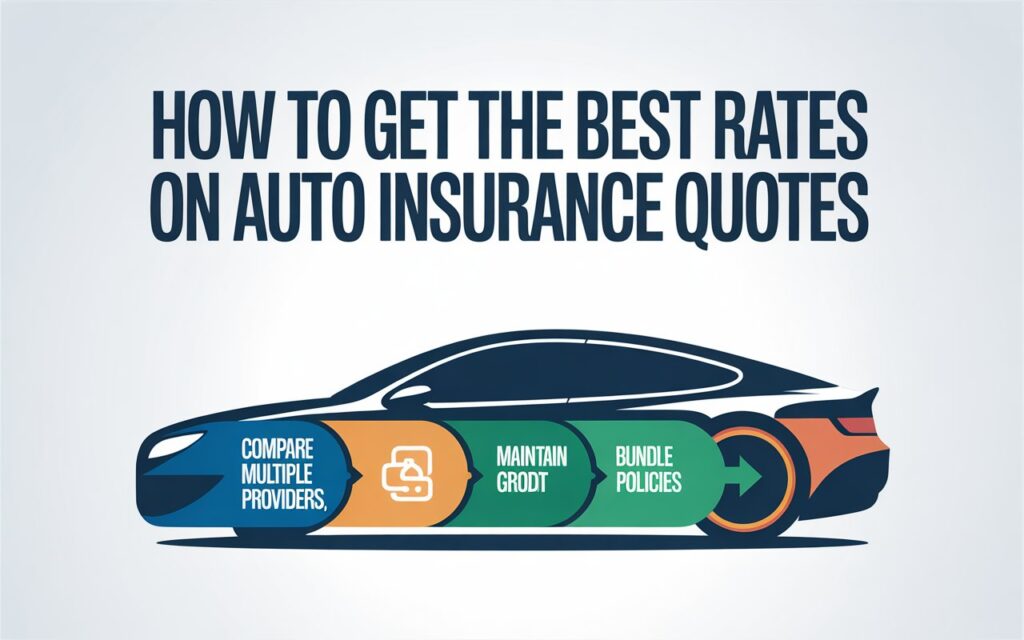
Step 2 — Get at Least 3 to 5 Quotes
Don’t settle for just one or two. Different companies weigh risk factors differently — one company might charge you $90 per month while another charges $140 for the exact same coverage. The more quotes you collect, the better your chances of finding the best deal.
Step 3 — Compare the Same Coverage Across All Quotes
This is where most people go wrong. They compare a basic policy from one company with a full-coverage policy from another and wonder why the prices are so different. Always compare the same coverage types and the same deductible amounts across every quote.
Step 4 — Ask About Available Discounts
Most insurance companies offer discounts that many customers never ask about. Common ones include:
- Safe driver discount — for having a clean driving record
- Bundling discount — when you combine auto and home insurance with the same company
- Good student discount — for students with a GPA of 3.0 or higher
- Low mileage discount — if you drive fewer miles than average
- Defensive driving course discount — after completing an approved safety course
Money-Saving Tip: Bundling your auto and home insurance together can save you anywhere from 10 to 25 percent on both policies. Always ask about this when getting quotes.
Higher Deductible vs. Lower Deductible — Which Is Better?
One of the easiest ways to control your monthly premium is by choosing your deductible carefully. Here’s how it works:
- $250 deductible — Higher monthly premium, but only $250 to pay if you have an accident. Good if you want low financial risk.
- $500 deductible — Moderate premium. The most common choice and a good balance for most drivers.
- $1,000 deductible — Lower monthly premium, but $1,000 out of pocket after an accident. Good for confident drivers with savings available.
- $2,000 deductible — Lowest monthly premium, but $2,000 due after a claim. Only recommended if you rarely drive and have savings set aside.
Important: Only choose a high deductible if you actually have that amount of money saved and accessible. If you pick a $2,000 deductible but don’t have $2,000 available, a single accident could put you in serious financial trouble.
Should You Use a Broker or Go Direct?
When shopping for auto insurance, you have two main options:
Going Direct means contacting the insurance company yourself through their website or phone. You sometimes get exclusive online discounts, but you have to do all the comparing yourself.
Using a Broker means someone shops multiple companies for you and presents your options together. This saves time and can uncover deals you might miss. Many brokers are free since they earn a commission from the insurer.
For most people, starting with a comparison website like NerdWallet, The Zebra, or Policygenius is a great middle ground — you get multiple quotes quickly without paying any fees.
Frequently Asked Questions
How often should I compare auto insurance quotes?
Once a year is a good habit, even if you’re happy with your current insurer. Rates change over time, and a competitor might offer better pricing. Also shop around after any major life change like moving to a new city, buying a new car, or getting married.
Does getting multiple quotes affect my credit score?
No. Auto insurance quotes are soft inquiries and do not affect your credit score at all. You can request as many quotes as you like without any negative impact.
What is the minimum car insurance required by law?
It depends on your state. Most states require at least liability coverage. Some also require personal injury protection or uninsured motorist coverage. Check your specific state’s requirements before buying any policy.
Can I lower my rate after I’ve already signed a policy?
Yes, in some cases. Ask your insurer about discounts you may qualify for, complete a defensive driving course, or simply call and ask if there are ways to reduce your rate. Many companies will work with loyal customers.
Final Thoughts
Finding the best auto insurance rate isn’t just about finding the cheapest option — it’s about finding the best value. The right policy gives you solid protection at a price that fits your budget.
Take your time, compare at least three to five quotes, ask about every available discount, and review your policy once a year. A little effort upfront can save you hundreds of dollars every year.
Key Takeaways:
- Get at least 3 to 5 quotes before choosing a policy
- Always compare the same coverage levels — not just the price
- Ask about every discount — many go unclaimed
- Choose a deductible you can actually afford to pay
- Bundling home and auto insurance saves 10 to 25 percent
- Review your policy once a year for better deals
Disclaimer: This article is for informational and educational purposes only. It does not constitute professional insurance advice. Insurance rates and coverage requirements vary by state. Always consult a licensed insurance agent before making any insurance decisions.

Hasnain Raza is a dedicated insurance researcher and content writer with a strong passion for helping people make informed financial decisions. With deep knowledge of health insurance, auto insurance, and business insurance, he creates clear, accurate, and up-to-date guides for readers in Pakistan and the United States. Through SKHFA.com, Hasnain aims to simplify complex insurance topics so that individuals can protect their finances and choose the right coverage. This website is for educational and informational purposes only. Readers are advised to consult a licensed insurance professional before making any financial or insurance decisions.